Battery technology pioneers and Europe’s largest independent ship design office join forces to promote ESS adoption
Energy storage experts Sterling PlanB and Europe’s largest independent ship design group, ICE, have announced an agreement to combine knowledge and resources in order to increase the adoption of energy storage systems (ESS) and thereby accelerate the maritime industry’s energy transition.
Exchanging market and technology information, Sterling PlanB and ICE will combine efforts through their collaboration to enhance the use of energy storage systems on ships and support the industry’s decarbonisation journey. As leading companies in their respective fields of expertise, they together form a unique combination of complementary understanding and experience that offers ship owners and operators an optimized and integrated solution for adopting ESS.
Sterling PlanB has been at the forefront of maritime battery and ESS technology for many years, particularly in the field of safety thanks to its design expertise, while ICE’s extensive experience in marine design and engineering for clients world-wide is ideally suited to integrate ESS’s as a key element in new buildings or as retrofits in existing ships.
Sterling PlanB CEO Brent Perry said: “ESS will be an essential part of shipping’s decarbonisation journey. Regardless of vessel type, all vessels can benefit from ESS installation helping them to save fuel, operate with a more stable load, and increasing safety with improved backup power. However, integrating battery technology into vessel design requires specific expertise, and it’s important that ESS installation is considered as an integral part of a project rather than an afterthought. We’re excited to be working alongside ICE, who are bringing over 50 years of design expertise to the table, and we look forward to collaborating with them to realise new, low carbon vessel designs and retrofit projects.”
Steinar Draegebo, ICE’s Chairman and CEO added: “Sterling PlanB are proven leaders when it comes to ESS technology. We’re proud to be working with a company that prioritises safety and has the technical knowledge and capability to really push the boundaries of what’s possible with marine batteries. Sterling PlanB’s technology will help us meet our customers’ expectations of fuel efficiency, increased safety and reduced greenhouse gas emissions.”
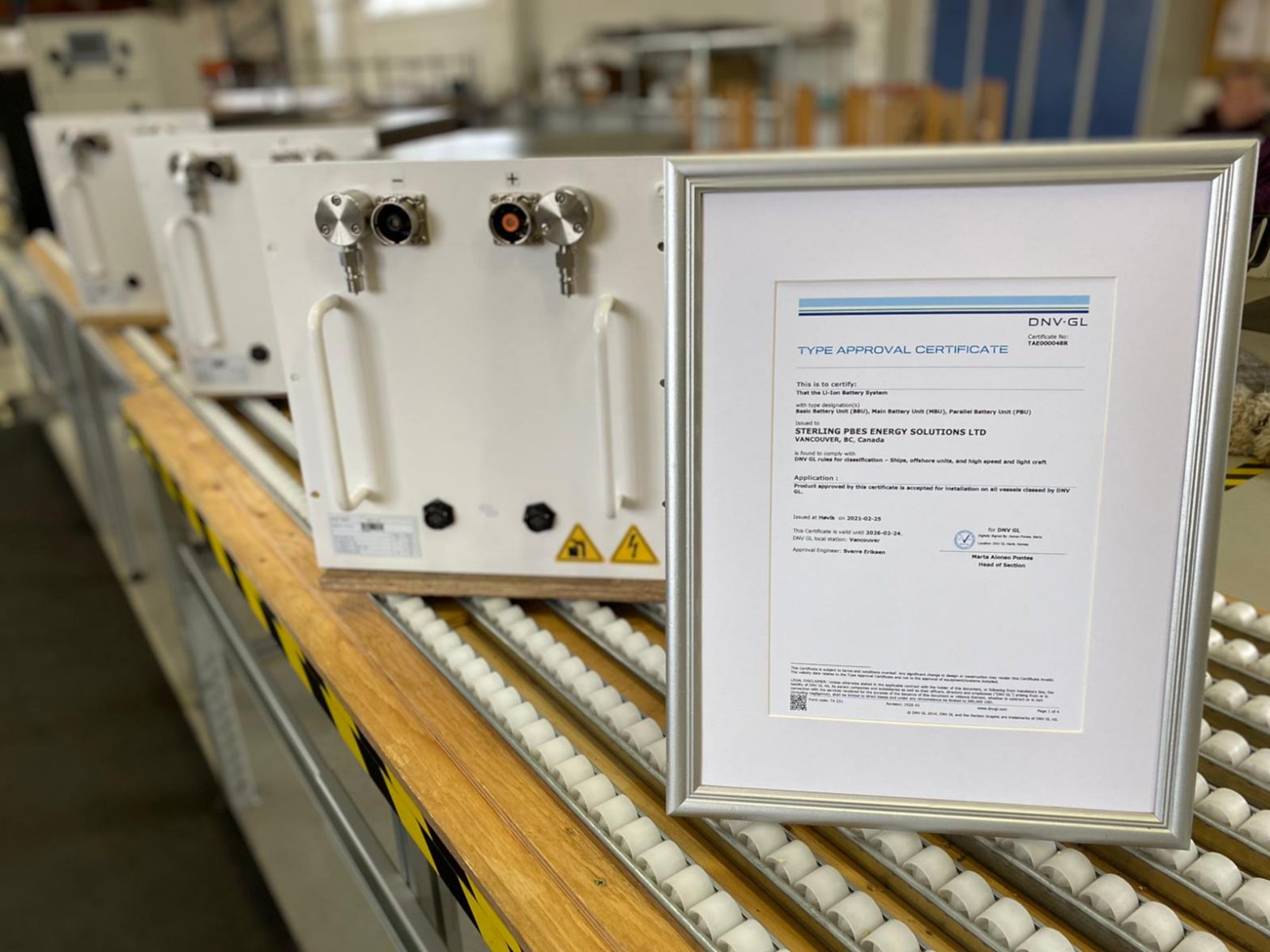
Sterling PlanB’s batteries are developed with the highest standards of safety in mind, particularly when it comes to tackling the risk of fire due to thermal runaway. Its systems are some of the first to meet classification society DNV’s new 2020 class rules for commercial vessel batteries, which substantially mitigates the risk of the spread of fire by eliminating the propagation of thermal runaway within a battery module.
About ICE
Benefitting from more than half a century of experience, ICE provides a complete range of cost-effective marine design services to shipyards and ship owners in the commercial marine, defence and offshore energy sectors, world-wide. Visit ICE at www.icedesign.info.
 The success of this test demonstrates that a battery room fire-fighting system is not required with the Sterling PlanB system, and that batteries can be placed in or near any manned or passenger space without introducing any additional fire or escape risk. The A60 test examines risks such as a fire in the machinery space adjacent to the lithium energy storage system, and the potential for a battery to contribute its considerable energy to the intensity of an existing fire.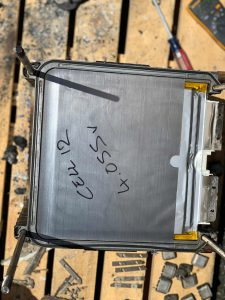
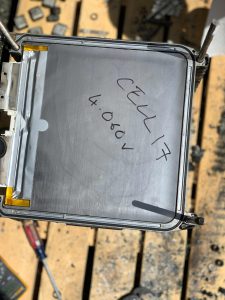 The test and the post-test dissection was attended by Lloyd’s Register and Transport Canada, as Sterling PlanB works towards development of an exemption to the requirements batteries have to be installed in a dedicated A60 Machinery Space. It comes as recent incidences of fire onboard passenger vessels with ESS have put battery systems under increased scrutiny.
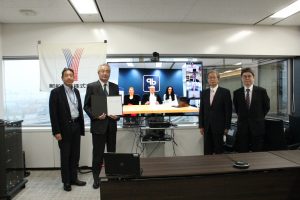 This move reflects the growing awareness that energy storage technology will be an essential component of the evolution of zero-carbon shipping, both in Japan and globally. Whether in combination with zero-carbon fuels, wind assisted propulsion, or other optimisation solutions, ESS can play a role in peak shaving, managing a hotel load, or supplying emergency power, both increasing performance and safety, and reducing fuel consumption.