Category: Articles

  • Gov. Inslee helps launch Washington’s first maritime startup accelerator in Seattle

    Gov. Inslee helps launch Washington’s first maritime startup accelerator in Seattle

    Excerpt from GeekWire, published January 22, 2020.   

    Written by

    The maritime industry has long been an anchor to Washington’s economy. Government and business leaders want to make sure that continues, especially with climate change and sustainability concerns looming.

    That’s the ethos behind the state’s first maritime startup accelerator, which officially launched Tuesday evening at the Port of Seattle headquarters.

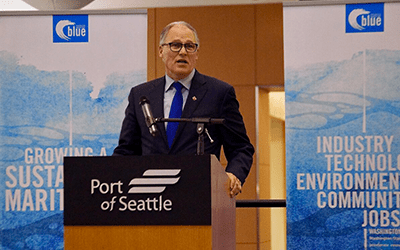
    Gov. Jay Inslee spoke at the event. The maritime industry runs deep in the governor’s family; his grandfather was a salmon fisherman in Seattle.

    “I could not be more excited about this because it’s an extension of the basic value system of the state of Washington,” Inslee said, pointing to other local innovation across industries such as retail, gaming, life sciences, and agriculture.

    The Port teamed up with WeWork Labs — WeWork’s startup incubator — and Washington Department of Commerce’s Maritime Blue initiative to create the 4-month program. There are 11 companies in the inaugural cohort, ranging from a healthcare provider for mariners to a whitefish jerky maker.

    The startups will work out of WeWork Labs’ Seattle location and get access to mentors and advisers. WeWork will facilitate seminars and workshops to help the companies navigate challenges and obstacles.

    Accelerators are common in the tech world, but rare in centuries-old industries such as maritime.

    WeWork said the maritime industry in Washington state employs 146,000 people with an economic value of $30 billion. However, a lack of capital both in the Pacific Northwest and worldwide restricts innovation.

    “We knew from our conversations around the globe that there are entrepreneurs and investors ready to take advantage of the blue economy as it’s growing exponentially in this next decade,” said Joshua Berger, Maritime Sector Lead for Gov. Inslee and board chair for Washington Maritime Blue.

    Inslee, the self-declared climate change presidential candidate who exited the race in August, said the accelerator is part of a “larger endeavor we have in the state of Washington.” He noted plans to create the word’s largest hybrid-powered, auto-carrying ferries as one example of reducing emissions and becoming more energy efficient.

    “So while we’re cleaning up the maritime industry, we think it’s the right thing to do to clean up terrestrial pollution as well,” Inslee said.

    SPBES (Vancouver, B.C.)

    “SPBES provides high power lithium ion energy storage to hybridize or electrify heavy industrial equipment. Purpose engineered for the rigors of the commercial maritime industry, SPBES is safer and longer lasting than any other product on the market.”

    You can read the full GeekWire article here.

  • A small ferry’s battery fire deserves global attention

    A small ferry’s battery fire deserves global attention

    Excerpt from ShipInsight Article. Published by Paul Gunton · 23 December 2019
    You can read the full article here

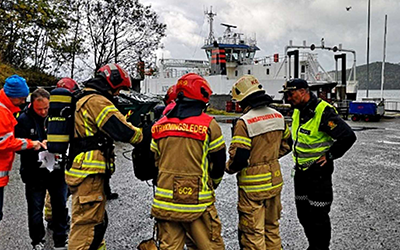
    A seawater fire extinguishing system that had been installed as an additional safety precaution on the Norwegian battery-hybrid ferry Ytterøyningen may have “contributed to escalating” events that led to an explosion that struck the vessel on 11 October. It followed an onboard fire the previous evening, according to a preliminary report into the incidents published last week by battery supplier Corvus, but what caused the blast is not yet known.

    Although the vessel was a small local ferry operating on a short route in western Norway and the fire had been detected when the vessel was just 200m from its berth at which it docked safely, I believe this incident merits worldwide attention. With battery hybrid power systems becoming more common and an expectation that they will take an important place in the path towards zero-carbon shipping, a fire and explosion involving batteries should alert system designers and operators that this is not a risk-free option.

    However, this was the first fire in a battery ferry in Norway and we should be grateful that this wake-up call has been sounded on such a vessel as this, rather than on a large passenger ship far out to sea.

    Read the full ShipInsight article here.

    For more information on battery safety see our latest post on how battery technology can reassure industry safety concerns.

  • Flying the Flag for Battery Power at the IMO

    Flying the Flag for Battery Power at the IMO

    It has been encouraging to see SPBES being asked to feed into high-level discussions on decarbonisation at the International Maritime Organisation (IMO). Decarbonisation is one of the most important issues of our time, and battery-based solutions are clearly a big part of that.

    In April 2018, IMO’s Marine Environment Protection Committee (MEPC) adopted an initial strategy on the reduction of greenhouse gas emissions from ships. The IMO’s stated goal is to see the shipping industry become carbon neutral as soon as possible within the century, using a similar mechanism of ‘ever more ambitious targets’ as the UNFCCC’s Paris Agreement has set for nation states. The IMO’s initial strategy specifically references the Paris Agreement and the targets that the 2015 document sets for unacceptable levels of warming.

    Of course, the International Maritime Organisation and shipping industry as a whole aren’t acting within a vacuum. The sector has traditionally had a reputation for being dirty which it is slowly overcoming, and there have been calls from various powerful bodies to bring the shipping industry into other legally binding programmes for emissions reductions. The most visible of these is from the EU, which proposed introducing emissions trading in the shipping industry at the IPCC’s COP25 climate conference earlier this month.

    The pressure to adopt greener solutions is growing, from both inside and outside the industry, and now is the time for the industry to plot its long-term future – away from GHG intensive fuels. The hope is that the IMO shows ambition in the solutions it chooses for the long-term.

    To this end, SPBES CEO Brent Perry gave a presentation to the IMO on the potential of battery powered ships to meet these decarbonisation commitments, together with ZESTAs (Zero Emission Shipping Technology Association), an NGO committed to assisting commercial shipping to reduce emissions on a steep trajectory in line with 1.5 degrees. By creating a platform for zero emission ship(ZES) technologies to collaborate on ZES projects.

    Realising the IMO’s targets – and those of Paris – will undoubtedly require the mainstreaming of battery technology. The market agrees; battery-based solutions, if they be fully electric or hybrid, are already being adopted at pace in certain sectors. Those include short haul passenger ferries, while there is an ever-growing market share in short to medium haul transporters. We believe that battery power will become ‘the new oil’ and become applicable to vessels of any size.

    Aside from the obvious benefits of reducing shipping’s impact on global warming, one of the main advantages of battery power is that it has the potential to make life much more predictable for the shipping industry. Currently, almost every element of shipping is at the mercy of fluctuations in oil prices, making it difficult to plan ahead for long term economic and environmental sustainability.

    We were pleased to see high level of Interest in the presentation, which generated some great debate from the participants.

    It is clear, however, that there is much to be done in terms of building awareness of the emissions reduction technology that already exists for shipping, and how much can be done now to reduce emissions, without waiting for 2030, or 2050, to take action, given the current mechanisms that exist to reduce carbon.

    This is why it is currently necessary for battery suppliers to ensure that they are innovating as much as possible to maximise the commercial benefits, safety and performance of battery technology.

    SPBES’ unique CellSwap technology allows users to replace lithium cells without replacing the entire battery. Not only does this save on recycling at the end of a battery’s lifespan, but it also means that a new cell can be installed for 60% of the cost of buying a new system.

    The advantages of this are twofold. Firstly, it means that our battery systems can be built using smaller systems that can be re-cored after five years, rather than the marine industry standard of ten.

    Batteries built to last for ten years are necessarily larger, compensating for degradation in usable capacity over time. The capital cost of installing the smaller battery is far lower and leads to a much faster return on investment, as well as saving on space and weight. The smaller size also allows users to capture advances in battery technology sooner.

    Of course, safety is key to more widespread adoption of batteries, as vessels with ESS become larger, and are required to operate for longer, further away from land as longer-distance use of battery power becomes more feasible.

    At SPBES, our battery cells are individually housed – making isolating and replacing a damaged cell much easier for a crew onboard a ship and reducing risk of thermal build up. The risk is now low and as technology improves it is getting lower.

    It is for these reasons that battery solutions, including hybrid battery solutions, are now seen as viable solutions across the industry – and why it is vital that we engage with partners throughout the industry to demonstrate that they can be used to cut emissions now – without waiting for 2030 or 2050.

  • How can battery technology reassure industry safety concerns?

    How can battery technology reassure industry safety concerns?

    Written by Brent Perry, CEO, SPBES
    Published in ShipInsight, see link for article here.

    The shipping industry is currently finding itself at a vital transition point with respect to creating a more sustainable future, and with it, embracing the opportunity of lithium-ion technology as an increasingly viable energy storage solution.

    Just by looking at the increasing prevalence of the electric and hybrid vessels as a barometer for pace of change, it is indeed a promising future for the lithium ion energy storage system (ESS). The cruise and ferry industry are increasingly looking to lithium-ion batteries as ESS within their electric-hybrid vessels. This is especially true in Norway, where regulators and owners are leading attempts in adopting electric shipping to power the hundreds of cruise and ferry routes to make the fjords a carbon-neutral zone.

    The recent fire on board the Norwegian ferry, Ytterøyningen, however, has brought the safety issue of batteries at sea into focus. As with any new propulsion technology, it is essential that the industry understands the best practices that go with managing risks and how design, installation and operation of batteries can ensure that they are safe.

    Preventing Thermal Runaway

    The biggest risk surrounding the lithium-ion ESS is thermal runaway. This manifests as a positive feedback loop of increasing battery temperature.

    This can occur after being subjected to mechanical abuse or operating over, or under, the correct voltage or internal temperature. In these situations, heat may be generated within the lithium-ion cells which may in turn increase to a point whereby it melts the separators inside the cells. This causes a reaction between the cathode material and electrolyte and can result in the temperature increasing until the cell vents toxic and flammable gasses. If ignition occurs, these gasses can create an unpredictable fire which can be very difficult to extinguish. In large enough concentrations in an unvented room, these gasses are also capable of creating very large explosions.

    So what solutions are available when it comes to mitigating the risk of thermal runaway within a lithium-ion battery?

    Battery design is key in this instance. The use of complete liquid cooling systems is one verified approach to managing battery temperature, whereby chilled water is circulated through the core of a battery. Liquid cooling, as opposed to air cooling, cools both the interior and exterior of a battery unit. As well as being more effective, liquid cooling has been proved to be far more efficient than air cooling, which requires 3500 times more air flow volume than water flow volume to achieve the same heat removal. To try to compensate, the battery room for an air-cooled system requires a both a robust HVAC system and a way to evenly circulate the cooled air over the individual cells, an extra cost not typically included in the battery price by the battery vendor.

    Mitigating the risks of fires resulting from thermal runaway is only the first layer of protection that ESS must incorporate if they are to be used safely. The risk of a fire cannot be removed in its entirety, so failsafe mechanisms have to be in place in order to reduce the risk to the crew and vessel. Venting mechanisms can remove the flammable gasses away from an unstable battery, reducing the risk of a battery exploding.

    Battery Lifecycle and Safety

    The age of batteries is also a factor in managing risk. Naturally, batteries towards the end of their operational life do present the biggest risk to vessels as the cell materials degrade. This can be mitigated, to some degree, by systems, such as SPBES’ CellSwap system, which allows owners to use smaller systems with a shorter lifespan – negating the need for an over-sized battery that compensates for degradation over time. In this system, battery cells can easily be removed from the rest of the battery and replaced after five years, rather than the standard ten-year lifespan. This means that the batteries used can be smaller, which in itself reduces risk (as well as saving weight and space). It also means that batteries suffer less degradation. Liquid cooling also mitigates risk, as it stops batteries heating up unevenly.

    Smart Charging

    Another factor in ensuring safety is the integration of an intelligent battery management system into the wider automation systems of a vessel. This allows accurate monitoring of voltage and temperature of the lithium ion cells, and links directly to the alarm system. It also allows batteries to charge intelligently – slowing the rate of charge as the battery fills up to avoid overcharging, similar to the charging technology used for electric cars. As long as this system is in place, there is little additional risk to charging batteries as opposed to any other high voltage ship-to-shore power link.

    Best Practice

    Complementing a good design with best practice for safety and thermal management is the first major part of managing the safety concerns that accompany lithium-ion ESS. As there are safety practices for every power solution, whether it is bunker fuel oil, LNG or methane, safe operating practices are fundamental when it comes to marine batteries.

    In the wake of the Ytterøyningen fire, Norwegian Maritime Authorities have issued two safety recommendations: that battery units on hybrid vessels should be connected at all times to alarm systems and regular risk assessments are carried out on battery units.

    Recycling

    Mirroring their operational environmental credentials, how can marine batteries be environmentally friendly when they’ve reached the end of their operational life? Akin to embedding safe design, constructing batteries out of recyclable materials is a big leap forward in improving the eco-credentials of marine batteries. Ordinarily, when a battery comes to the end of its life, the whole system must be recycled and replaced with new components. Companies like SPBES have taken on this problem by designing a battery system with a 30-year life that includes CellSwap every 5-10 years. Replacing only the cells leaves the balance of system in place and significantly reduces the amount of recycling needed. The cells are certified as recycled, and the clients have clarity on the total environmental impact of their ESS. In other cases, where the entire system has to be replaced every 5-10 years, the recycling impact can be significantly higher, with no managed overview to ensure total recycling. This usually requires replacing a plastic housing and internal components held together with glue, creating a large amount of waste. As we see it, a better option is to recycle only the cell as most of the parts of a battery cell, including the rare earth metals used to create it, can be recovered using the latest recycling techniques.

    It is encouraging to see the shipping industry take steps into exploring the use of electric hybrid vessels. However, as with any transformation, there will be concerns, especially with something as deadly as fires and explosions.

    Therefore, it is vital that marine batteries have safety embedded within design, as well as operated alongside robust safety procedures. This will allow a greater scale of update and lead to widespread benefits realisation.


    Published in ShipInsight, see link for article here.
  • Practical Application of Energy Storage

    Practical Application of Energy Storage

    Excerpt from The Journal of Technology, written by Grant Brown, VP Marketing SPBES.  Published November 2018.  Read full article here.

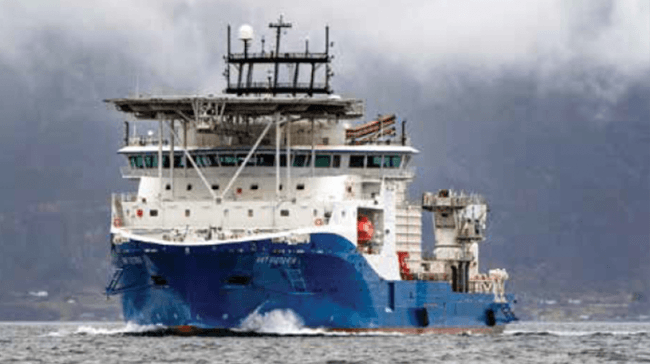
    Marine engineers have long been aware of the potential efficiency increases from hybridizing their onboard energy systems; the ability to optimize the use of diesel generators by storing excess energy and using it to provide propulsion during low load times. However, only recently has the battery technology been improved to the point of allowing large-scale systems to survive in a commercial marine environment. Not only do these new energy storage systems survive, they are designed for and excel in commercial marine environments. Hybrid tugboats, offshore supply vessels (OSV), ferries and a variety of other purpose built vessels all derive huge efficiencies from the use of onboard energy storage.

    These hybrids range from new builds to retrofits of existing vessels. Payback on investment is a critical component in the decision to convert or build a hybrid workboat. However, an often overlooked benefit is the redundancy and increased safety offered to the operator of a hybrid vessel. A vessel employing a large battery or energy storage system (ESS) not only operates more efficiently, it also has an ability to draw upon a reserve of energy instantly. This pool of energy may be used as spinning reserve to keep the vessel from harm’s way in the event of power loss, provide emergency navigation and hotel loads, auxiliary propulsion power, and even extra bollard pull to the main drives in the event of an emergency situation while towing. While these and other advantages, such as the environmental and cost savings benefits, are well-documented, real world lessons learned by an experienced integration and engineering team are exceptionally valuable. This experience helps vessel owners, operators and designers understand how to design and integrate a lithium energy storage system for safe, reliable use, now and for years to come.

    Simply put, batteries will reduce a vessel’s exposure to risk and make it fundamentally safer to operate, while providing economic gain for vessel owners.

    Risks of Energy Storage
    Despite the obvious advantages to a vessel using energy storage to increase efficiency, redundancy and safety, the batteries themselves may pose risk. Due to an event known as thermal runaway, the batteries, if not managed within certain and specific parameters, may pose risk of combustion.

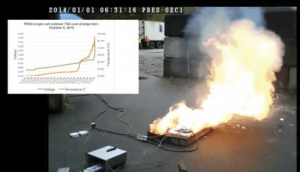
    Lithium ion cell forced into thermal runaway – all safety mechanisms disconnected.

    Thermal runaway occurs if the lithium-ion cells used in marine batteries are subjected to electrical or mechanical abuse, suffer from internal manufacturing defects, or operate over or under the correct voltage or temperature. Heat is generated within the lithium-ion cells and in cases where this heat exceeds a specific temperature (usually in excess of 120˚ centigrade), the internal structure of the cell begins to degrade. This degradation results in the internal separators melting and thus causes a reaction between the cathode material and electrolyte. This can result in the cell temperature increasing until the cell vents toxic and flammable gases. If ignition occurs, these gases can create an unpredictable fire, which can be very difficult to extinguish.

    Therefore it is extremely important to a) reduce risk by designing and manufacturing the highest quality product available, b) reduce risk by managing the batteries in the safest possible way and c) provide a system that is capable of containing and suppressing thermal runaway should it occur. While we have come to accept the risks of maintaining large quantities of flammable diesel on board a vessel, it is due to decades of experience that we now have very little incidence of diesel fire. This is due to trial and error, consistent regulation, and adoption of best practices for management of the systems.

    The same learning curve is occurring in the marine industry regarding large-scale lithium batteries. Currently, regulations do not reflect the realities of the size and types of systems that are now being installed and while it is unfortunate, it may take some sort of significant incident to force the industry regulators to adopt stricter regulation.

    Fire Suppression
    Given the possible issues associated with fire and explosion, the class groups have spent a lot of time focusing on how to prevent and manage fires and thermal runaway. No matter the amount of care that the class rules can apply to prevention, it does not remove the battery manufacturers from the responsibility of incorporating sophisticated prevention systems into the design of the batteries. With lithium energy storage systems now regularly being discussed that exceed several MWh of capacity, the risk of thermal runaway or fire cannot be taken lightly. Today’s hybrid designs must take this into account and do everything possible to ensure that a fire cannot start in the first place. This has created a shift in thinking that is driving designs to incorporate liquid cooling systems. These liquid cooling systems manage battery safety inside the core of the module through temperature control and management at the cell level. Fire suppression is critically important but must be viewed as a secondary system to manage the issue in extreme circumstances, after all else fails. Fire suppression systems therefore are recommended to control external fires adjacent to the energy storage system to prevent them from causing a thermal event in the battery room. If desired, fire suppression in the battery room may also be employed to further give peace of mind as a backup system. Mist type fire suppression provides adequate cooling to suppress virtually any fire (outside of a major catastrophe involving the ship itself) that may pose a hazard to the energy storage system. In order to meet class standards, the energy storage system itself must be rated for IP67 water resistance and therefore able to safely withstand activation and use of mist type fire suppression.

    Management Systems, Communications and Controls
    Modern battery systems provide an ability to not only integrate with existing systems on board the vessel, but also increase longevity of system life and enhanced safety of the system. These systems reside inside the battery modules and the system controller, which in turn communicates with the other vessel power electronics. The Battery Management System (BMS) is able to predict module lifespan using complex algorithms that incorporate historical data and projected future use. This allows vessel owners to alter their use profile of the energy storage system to a) increase lifespan, b) increase vessel fuel efficiency, or c) a combination of both. The BMS is also an extremely important part of the safety system of the ESS. It constantly monitors the internal core temperature of the modules and if they are going out of spec (too hot or too cold), they will warn the vessel captain to limit use. The BMS is also able to actively monitor the state of health of the system within the temperature warnings; if a specific component in any one part of the entire system is out of spec, the system will warn the captain and the team who is monitoring it. The monitoring team will then proactively engage with the vessel and determine what, if any, course of action need be taken. If the warnings continue without intervention from the team, or if the vessel crew ignores the warnings, the system will protect itself and the vessel by disengaging from the DC bus and isolating all the modules in the system via their internal contactors, effectively reducing system voltage from a maximum of 1,000 V to ~100 V (the voltage of a single module). As the controls are powered separately from the ESS, they are safer in that there is redundancy in the system. It will always have an external power source ensuring the cooling system is operating and the management system is communicating with the vessel and system administrator team at all times, regardless of the system status.

    Cooling Systems
    While the industry standard for many years was passive cooling on all systems, it is increasingly apparent that the smaller systems demanded by industry are required to operate at, or beyond, the limits of passive cooling. Virtually all modern ESS employ some form of liquid cooling, either as an optional addition to the standard system or as an integral component. Advanced, state of the art ESS use individual cell level cooling systems; the coolant circulates within the very core of the battery module at a low pressure enabling far greater charge and discharge currents, increased lifespans, and reduced system sizes. In fact, the most modern of these systems has been validated to discharge approximately 16 times more power than the current industry standard product. Typically the ESS will connect to a standard chiller of specified size, using an inexpensive and small pump and be able to meet the very high demands with a far smaller system size and capacity with resulting cost savings benefits.

    Conclusion
    The new breed of hybrid commercial vessel is now a proven workhorse capable of huge economic and environmental benefits in virtually every application it is deployed (Figure 5). The added risk mitigation and increased safety has tangible value that should not be dismissed. No longer is the reduced cost of ownership from the decreased fuel consumption and maintenance outweighed by concerns about safety and reliability. As with any updated technology, lithium energy storage is new and system design is currently being refined, as are class rules regarding the use of the technology. As a co-founder of one of the early companies developing energy storage for hybrid marine systems, I have observed the industry develop, grow and mature. It is my assertion that the technology is gaining momentum by leaps and bounds. As it continues to evolve so will advances in the design and safety of the systems and increasingly strict regulations governing their use. The industry is now producing safe, reliable systems that provide meaningful financial benefits for the owners, safe operation for the crew and, ultimately, huge environmental benefits for the planet.

    Read full article here.

  • PBES, Sterling and Wilson Announce Strategic Partnership

    PBES, Sterling and Wilson Announce Strategic Partnership

    Partnership provides stability and further develops markets to propel PBES to ‘next level’

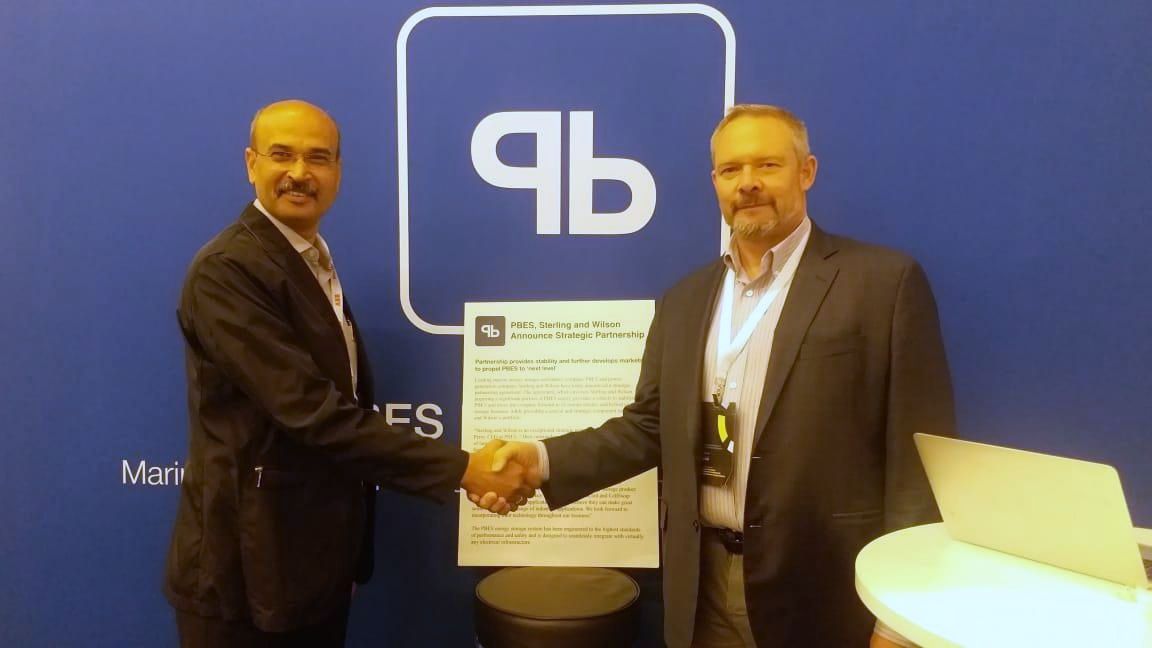
    Vancouver, Canada – June 5, 2019 – Leading marine energy storage and battery company PBES and power generation company Sterling and Wilson have today announced a strategic partnership agreement. The agreement, which involves Sterling and Wilson acquiring a significant portion of PBES equity, provides a vehicle to stabilize PBES and move the company forward in its marine electric and hybrid energy storage business, while providing a critical and strategic component in Sterling and Wilson’s portfolio.

    “Sterling and Wilson is an exceptional strategic partner for PBES,” said Brent Perry, CEO at PBES. “Their outstanding organization and understanding of large power systems make them an ideal partner strategically, as well as financially, in supporting us in taking PBES to the next level. We are delighted to announce this agreement and look forward to introducing their team and full range of products and services to our key customers and stakeholders in coming weeks, and long term success over the coming years”.

    Sanjay Jadhav, CEO at Sterling and Wilson Powergen added:, “PBES technology is undoubtedly the best quality and safest energy storage product in the industrial sector. Their key features such as CellCool and CellSwap were designed for marine applications, but we believe they can make great sense across a broad range of industrial applications. We look forward to incorporating their technology throughout our business”.

    The PBES energy storage system has been engineered to the highest standards of performance and safety and is designed to seamlessly integrate with virtually any electrical infrastructure.

    About PBES

    PBES is a leading designer and manufacturer of high power lithium-ion energy storage units and batteries. Comprised of the most experienced team in the sector, PBES is focused on providing value and safety for industrial, marine and grid energy storage applications. www.ssssspbes.com.

    About Sterling and Wilson

    Sterling and Wilson is an excellent example of how the Shapoorji Pallonji family has nurtured long term associations with its business partners. The Mistry and Daruvala families have been partners in Sterling and Wilson for 3 generations. This partnership will only grow stronger, as the 4th generations of both families have recently joined the business.

    Over the past 5 years, Sterling and Wilson has shown exceptional growth; with operations all over the globe, as well as an expansion in its range of services, the company’s turnover has shown an extremely positive growth. From a turnover of $254M USD (INR 1,760) crore in 2012, Sterling and Wilson group crossed a turnover of $866M USD (INR 6,000 crore) and is likely to exceed $1,443M USD (INR 10,000 crore) by 2020. From being a predominantly India focused company in 2010, Sterling and Wilson now operates across the Middle East, Africa, Australia and Europe. In the current year, the company is expanding to the USA and South America. From being a company that was mainly focused on doing MEP projects in India, Sterling and Wilson over the past 5 years has set up global operations in manufacture of DG sets, Gas based power plants, Waste to Energy, Turnkey data centres, Transmission and Distribution and Solar EPC. With its recent foray into energy storage, Sterling and Wilson is perfectly poised to play a pivotal role in the global trend of moving away from thermal plants to a future of renewable energy with storage.

    ###

    Media Contact PBES:
    Grant Brown
    Vice President Marketing
    PBES
    +1 604 328 2046
    gbrown@ssssspbes.com

    Media Contact Sterling & Wilson:
    Pradeep Singh
    Sr. Manager, Corporate Communication
    Sterling and Wilson Pvt. Ltd.
    +91 9930143519
    pradeepsingh@sterlingwilson.com

  • Practical Application of Energy Storage in Hybrid Commercial Vessels

    Practical Application of Energy Storage in Hybrid Commercial Vessels

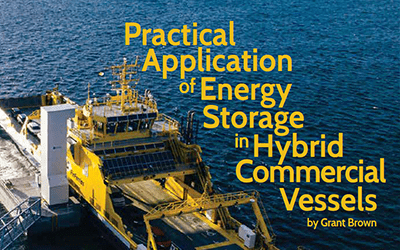
    By Grant Brown, VP Marketing for PBES, Published in The Journal of Ocean Technology

    Marine engineers have long been aware of the potential efficiency increases from hybridizing their onboard energy systems; the ability to optimize the use of diesel generators by storing excess energy and using it to provide propulsion during low load times.

    However, only recently has the battery technology been improved to the point of allowing large-scale systems to survive in a commercial marine environment. Not only do these new energy storage systems survive, they are designed for and excel in commercial marine environments. Hybrid tugboats, offshore supply vessels (OSV), ferries and a variety of other purpose-built vessels all derive huge efficiencies from the use of onboard energy storage.

    These hybrids range from new builds to retrofits of existing vessels. Payback on investment is a critical component in the decision to convert or build a hybrid workboat. However, an often overlooked benefit is the redundancy and increased safety offered to the operator of a hybrid vessel. A vessel employing a large battery or energy storage system (ESS) not only operates more efficiently, it also has an ability to draw upon a reserve of energy instantly. This pool of energy may be used as spinning reserve to keep the vessel from harm’s way in the event of power loss, provide emergency navigation and hotel loads, auxiliary propulsion power, and even extra bollard pull to the main drives in the event of an emergency situation while towing. While these and other advantages, such as the environmental and cost savings benefits, are well-documented, real world lessons learned by an experienced integration and engineering team are exceptionally valuable. This experience helps vessel owners, operators and designers understand how to design and integrate a lithium energy storage system for safe, reliable use, now and for years to come.

    Simply put, batteries will reduce a vessel’s exposure to risk and make it fundamentally safer to operate, while providing economic gain for vessel owners.

    Read the full story here.  Read more stories from their August issue here.

  • Safety Concerns for Hybrid & Electric Ships

    Safety Concerns for Hybrid & Electric Ships

    Each year there are more and more hybrid or fully electric ships navigating waters worldwide. All modern commercial vessels may soon have some form of energy storage on board.

    These ships range in type from ferries transporting thousands of people daily to offshore supply vessels that maintain safety in critical oil rig operations. The ships increasingly rely on lithium-energy storage as their power source, with modern designs containing more than 1,000 individual modules (batteries). The technology has proven itself reliable and powerful, however, safety concerns linger and should be an utmost consideration for this new technology.

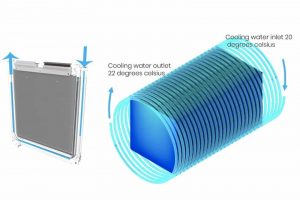
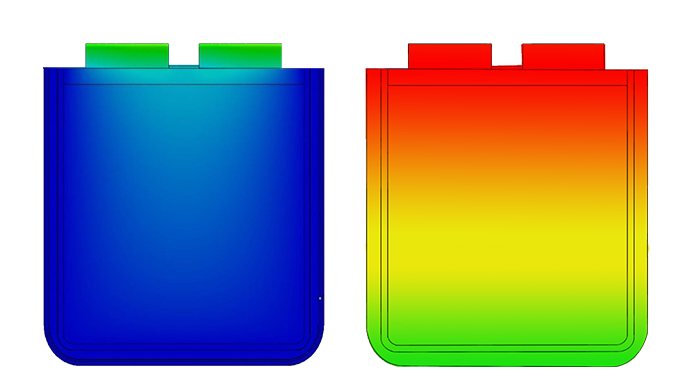
    The left – evenly cooled lithium cell using liquid cooling. The right – uneven heat distribution from air cooled cell.

    Not all battery systems are equipped with the same safety systems. Testing and certification for battery systems aboard ships has increased, but room remains to raise the bar higher.

    One of the biggest risks for batteries is thermal runaway. Thermal runaway occurs if the lithium-ion cells used in marine batteries are subjected to mechanical abuse, suffer from internal manufacturing defects, or operate over or under the correct voltage or temperature. Heat is generated within the lithium-ion cells and causes a reaction between the cathode material and electrolyte. This can result in the cells’ temperature increasing until they vent toxic and flammable gases. If ignition occurs, these gases can be a fire hazard.

    Currently, there are many battery solutions on the market that use an air-cooling system to try to maintain safe internal temperatures. The effective-ness is questionable, and the reliance on a thin-layer, fire-resistant separator between cells only reduces the fire risk from thermal runaway—it does not prevent it. It is far more sensible to take all reasonable precautions to eliminate thermal runaway from occurring in the first place.

    Liquid cooling is the only safety system currently tested and proven to pre-vent thermal runaway. Liquid cooling prevents batteries from entering thermal runaway by simply extracting more heat than the cells can produce. Similar to an engine block of an automobile, a low-pressure, high-volume closed loop of chilled water is circulated through the battery. Taken a step further, coolant can be circulated through the alloy core of the battery, around each individual cell, enabling removal of more thermal energy than the cells can produce when in an overcharge or damage scenario.

    In comparison, forced-air cooling only cools the external surfaces of the module and is ineffective at eliminating hot spots in the cells. An air-cooled battery requires around 3,500 times more air-flow volume than water-flow volume to achieve the same heat removal.

    Read the full article here.

  • Batteries for ferries and vessels is in big growth – Two leading manufacturers are dominating todays market

    Batteries for ferries and vessels is in big growth – Two leading manufacturers are dominating todays market

    According to Maritime Battery Forum the growth of maritime batteries is exceptional – Growth is at 30%

    Translated version – Original article by Tore Stensvold –Published: 24. Jan. 2018 

    Suppliers of Energy Storage Systems within the Maritime Industry, grows along with the electric development of ferries and hybrid engineering for Offshore Industry. It all started with the electric ferry Ampere, by Norled in 2015. More vessels are to come with battery solutions on-board.

    Today 203 vessels in the civilian and commercial market are installed with energy storage systems that either partly or fully replace the need of fossil fuels. Two suppliers are dominating todays market: all together Corvus and PBES supply more than 50%. It´s a long way down to number three, four and five. That is French SAFT, Dutch EST-Floattech and Norwegian ZEM. And new suppliers are breathing down their neck.


    Electric Ferry, Ampere, started its journey in 2015 on the route of Sognefjorden along E39, Lavik-Oppedal. (Picture: Tore Stensvold)


    Canada and Bergen:

    Corvus Energy last year sold energy systems all together 50MWh capacity to 50 vessels. The year before that, 2016, their total sales were 5,5MWh. The HQ, production line and development is based in Vancouver. Most of sales, service and marketing is in Bergen. Sales Manager Halvor Hauso for Corvus says that 2018 will be a bigger sales year than their record year of 2017. Budget figures and targets for 2018 are not yet ready, as Corvus has a deviating financial year.

    • So far it looks like number of MWh sold will grow in the year 2018, says Hauso to TU. 
    Canada and Trondheim:

    The second biggest supplier, Plan B Energy Storage(PBES), delivered a total of 15,3 MWh for a total of 20 energy storage systems in 2017. PBES built their production line in Trondheim and most of the engineering and sales is in Norway.

    VP Brand and Marketing, Grant Brown for PBES says to TU that they see a big growth for the sales figures of 2018.

    • “We already have 11 orders totalling 9 MWh and anticipate far more sales through the electrical system integrators, “said Brown.
    Germany and Trondheim:

    One of the new suppliers of maritime batteries is Siemens. Siemens has developed their own batteries and is starting production in Trondheim soon. Other system integrators consider the same. Swedish Echandia Marine, that delivered the electrical systems for coastal express BB Green, has published that they are engineering both lithium-titan-oxide and nickel-metal-hybrid batteries.

    Adaptation and Focus:

    Norwegian ZEM Energy is not that happy with Siemens building their own production line for maritime batteries. ZEM distributed batteries for Siemens project´s. In the future, it might be fewer of their distribution to Siemens.

    • The competition has expanded, Siemens addition to supply has not minimalized it, says Egil Mollestad for ZEM.

    Last year the company delivered Energy Storage Solutions together for roughly 3 MWh. A tougher competition ZEM will have with new types of batteries.

    • Throughout 2017 we developed a battery solutions for smaller vessels, small passenger ferries, workboats and similar. So far in 2018 we have two orders for these types of systems. We see it as an important and exciting market where we don’t have competition from the bigger suppliers Siemens, Corvus and PBES, said Mollestad.

    ZEM cooperates with Norsafe with development of battery driven lifeboats.


    The most important for offshore lifeboats is to quickly get away from the platform. Batteries is a excellent solution. (Picture: Norsafe)


    Crew Doubled:

    Grenland Energy is the smallest Norwegian battery supplier. They do the same as ZEM, develops and points systems to new market segments. In 2017 Grenland Energy supplied battery systems for two mobile, active HIV subversion subcomponents, but no ships. That is going to turn.

    • We have expanded and doubled the crew from five to ten employees. WE have been working allot with development and testing of a new generation batteries with a higher energy density, said Roman Stoiber, Grenland Energy.
    Fire Safety:

    The new batteries have been tested by the Norwegian Maritime Directorate´s propagation test1. The tests are very strict and shall prevent so-called Thermal Runaway, overheating and fire that can spread between the cells in lithium batteries.

    Battery Management Systems that passes the test, have integrated safety systems which makes it unnecessary with extra fire and explosion safety inside the vessel.

    • We are fully committed to the maritime market with the new generation and have the first order ready for delivery to Norleds Hybrid coastal express which is to be ready in 2019, said Stoiber to TU.

    The company is also working with two new Pilot E-Projects, NCE Maritime Clean Techs “Urban Water Shuttle” and autonomous ferries with Kongsberg Maritime. Hybrid Sacandlines-Ferry. The battery pack from Corvus is 2,7 MWh, here from Princess Benedikte after installation is complete. (Picture: Scandlines)

    New Markets:

    Daily Manager Sondre Henningsgård at Maritime Battery Forum sees that batteries are coming along well inside of new segments.

    • Ferries, passenger vessels and hybrids in the offshore business is still the biggest market. At the same time, it is clear that smaller vessels such as tugboats, luxury yachts and workboats are installing battery systems.

    PBES announced last week a contract for battery system to an Estonian police patrol boat and border control vessel.

    It´s a hybrid vessel, 44,6-meter-long and total weighs 220 metric ton. The propulsion system is 2 x 2000 kW and main engines is MTU 16V4000. Installation of the battery system will be in March this year and the size of it is 273 kWh. The German company Noris is the system integrators and ordered the batteries from PBES.

    Noris and PBES has signed a cooperation agreement, which resulted in yet another contract. PBES are delivering a battery package for 137 kWh to a smaller Swedish ferry. Both the ferry and patrol boat is being built at the Baltic Workboat Shipyard in Estonia. Both vessels will be delivered within 2018.

    Norwegianisation:

    Corvus was established in Vancouver, Canada in 2009. One of the founders, Brent Perry, joined forces to couple others after a few years out of the company and started Plan B Energy Storage.

    Last check and documentation (Picture: Tore Stensvold)

    Perry thought of Norway as a leaders for electric vessels and ferries. Through a delivery of Corvus batteries to the world´s first electric fishing boat, Perry met with CEO in Selfa, Erik Ianssen. The relations to Norway and Trondheim led to the establishment of the factory in Trondheim.

    Meanwhile Corvus is becoming more Norwegian. Statoil Technology Invest, BW Group and Hydro owns roughly 70% of stocks. Last one to buy in was Hydro, bought 25,9% stocks in November 2017. From 1. Jan. 2018 administrative director will be a Norwegian. Geir Bjørkeli came from the Dutch Huismans Norwegian offce and is now based in Bergen.

    PBES keeps their Canadian ownership, but are moving more of their activity to Norway.


  • Eco Friendly Electric Propulsion Coming to Canadian Aquaculture Industry 

    Excerpt from William Stoichevski article published in Salmon Business.  Link to original article here.

    Electric Aquaculture Vessels Could Hit Canadian Waters Soon

    Electrification of the growing fleet of aquaculture workboats is now underway. Last year the world’s first battery-powered work boat for fish farming was launched with enormous success. The fully electric Elfrida has been operating in the coastal waters of Norway since February 2017.

    The vessel, which is powered by 156kWh of PBES Power batteries, provides up to 12 knots speed and a full eight-hour shift per charge. Not only does the system eliminate emissions, the fact there is no noise, vibration or diesel fumes provides greater crew comfort, less fatigue and leads to safer working conditions onboard. Best of all, the vessel requires no diesel fuel, dramatically reducing operating costs.

    The Technology Shift Coming to Canada

    Stavanger-based Blueday Technology has recently won a contract to deliver the same emissions-cutting technology to the fish-farming operations of Grieg Seafood.

    Blueday, formerly Halvorsen Power Systems, integrates batteries into a vessel’s onboard power and propulstion system, while traditionally also providing stationary power generators. Its new SMART Hybrid Power solutions of integrated wind, solar and battery power will, it is understood, replace diesel generators and other aquaculture-related power producers at Grieg’s remote grow-outs like those in British Columbia, Canada.

    No More Diesel Leaks in Sensitive Waters

    Fish-farmers operating in B.C. have come under harsh criticism for repeat diesel leaks, although diesel generators remain the “preferred” power solution all along the Pacific Northwest, right up through Alaska and the Aleutian Islands. If Blueday can keep costs down, that Pacific preference might change.

    Blueday Technology, like onboard power integrators Siemens and ABB, are understood to use the battery technology of Canadian/Norwegian-based PBES Norway, founded by B.C. entrepreneur, Brent Perry. Both Blueday, which offers battery “choice”, and PBES have been along in the conversion of a growing number of Norwegian vessels — from ferries to fishing vessels — to hybrid and fully electric energy conversion.

    Battery/electric propulsion systems for ships can provide propulsion and house power for the full route as well as the working day aboard the vessel. This saves not only fuel but also operating costs, because an electric motor requires maintenance much less often than a diesel engine. Furthermore, work on an electric boat is eco-friendly for workers because of the absence of the exhaust gases, vibrations, and noise produced by a diesel engine.

    Grieg’s use of Blueday’s solution in Canada could be timed to perfection, as the Canadian government has just allotted millions of dollars for small and medium-sized fish farmers to get “greener” by investing in more energy-efficient designs of all sorts. The Blueday communique wasn’t clear on the configuration of the “green power” solution in their Grieg contract, but stationary power for Grieg sites in Canada is implied here. Grieg Seafood will now be greening fish farming assets and reducing greenhouse gas emissions,” Heggebo was quoted as saying.