Author: Shift Team

  • Practical Application of Energy Storage

    Practical Application of Energy Storage

    Excerpt from The Journal of Technology, written by Grant Brown, VP Marketing SPBES.  Published November 2018.  Read full article here.

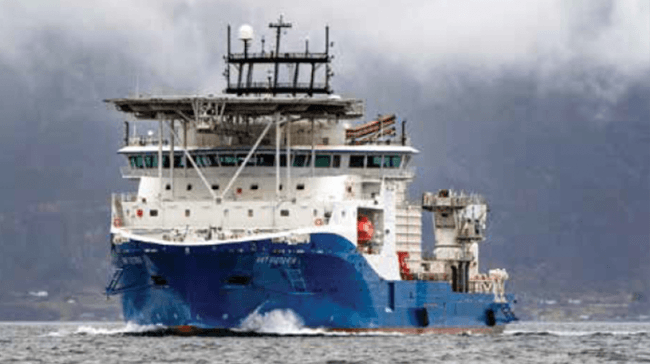
    Marine engineers have long been aware of the potential efficiency increases from hybridizing their onboard energy systems; the ability to optimize the use of diesel generators by storing excess energy and using it to provide propulsion during low load times. However, only recently has the battery technology been improved to the point of allowing large-scale systems to survive in a commercial marine environment. Not only do these new energy storage systems survive, they are designed for and excel in commercial marine environments. Hybrid tugboats, offshore supply vessels (OSV), ferries and a variety of other purpose built vessels all derive huge efficiencies from the use of onboard energy storage.

    These hybrids range from new builds to retrofits of existing vessels. Payback on investment is a critical component in the decision to convert or build a hybrid workboat. However, an often overlooked benefit is the redundancy and increased safety offered to the operator of a hybrid vessel. A vessel employing a large battery or energy storage system (ESS) not only operates more efficiently, it also has an ability to draw upon a reserve of energy instantly. This pool of energy may be used as spinning reserve to keep the vessel from harm’s way in the event of power loss, provide emergency navigation and hotel loads, auxiliary propulsion power, and even extra bollard pull to the main drives in the event of an emergency situation while towing. While these and other advantages, such as the environmental and cost savings benefits, are well-documented, real world lessons learned by an experienced integration and engineering team are exceptionally valuable. This experience helps vessel owners, operators and designers understand how to design and integrate a lithium energy storage system for safe, reliable use, now and for years to come.

    Simply put, batteries will reduce a vessel’s exposure to risk and make it fundamentally safer to operate, while providing economic gain for vessel owners.

    Risks of Energy Storage
    Despite the obvious advantages to a vessel using energy storage to increase efficiency, redundancy and safety, the batteries themselves may pose risk. Due to an event known as thermal runaway, the batteries, if not managed within certain and specific parameters, may pose risk of combustion.
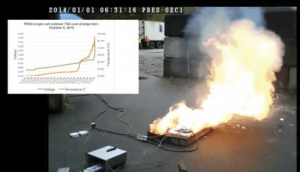
    Lithium ion cell forced into thermal runaway – all safety mechanisms disconnected.

    Thermal runaway occurs if the lithium-ion cells used in marine batteries are subjected to electrical or mechanical abuse, suffer from internal manufacturing defects, or operate over or under the correct voltage or temperature. Heat is generated within the lithium-ion cells and in cases where this heat exceeds a specific temperature (usually in excess of 120˚ centigrade), the internal structure of the cell begins to degrade. This degradation results in the internal separators melting and thus causes a reaction between the cathode material and electrolyte. This can result in the cell temperature increasing until the cell vents toxic and flammable gases. If ignition occurs, these gases can create an unpredictable fire, which can be very difficult to extinguish.

    Therefore it is extremely important to a) reduce risk by designing and manufacturing the highest quality product available, b) reduce risk by managing the batteries in the safest possible way and c) provide a system that is capable of containing and suppressing thermal runaway should it occur. While we have come to accept the risks of maintaining large quantities of flammable diesel on board a vessel, it is due to decades of experience that we now have very little incidence of diesel fire. This is due to trial and error, consistent regulation, and adoption of best practices for management of the systems.

    The same learning curve is occurring in the marine industry regarding large-scale lithium batteries. Currently, regulations do not reflect the realities of the size and types of systems that are now being installed and while it is unfortunate, it may take some sort of significant incident to force the industry regulators to adopt stricter regulation.

    Fire Suppression
    Given the possible issues associated with fire and explosion, the class groups have spent a lot of time focusing on how to prevent and manage fires and thermal runaway. No matter the amount of care that the class rules can apply to prevention, it does not remove the battery manufacturers from the responsibility of incorporating sophisticated prevention systems into the design of the batteries. With lithium energy storage systems now regularly being discussed that exceed several MWh of capacity, the risk of thermal runaway or fire cannot be taken lightly. Today’s hybrid designs must take this into account and do everything possible to ensure that a fire cannot start in the first place. This has created a shift in thinking that is driving designs to incorporate liquid cooling systems. These liquid cooling systems manage battery safety inside the core of the module through temperature control and management at the cell level. Fire suppression is critically important but must be viewed as a secondary system to manage the issue in extreme circumstances, after all else fails. Fire suppression systems therefore are recommended to control external fires adjacent to the energy storage system to prevent them from causing a thermal event in the battery room. If desired, fire suppression in the battery room may also be employed to further give peace of mind as a backup system. Mist type fire suppression provides adequate cooling to suppress virtually any fire (outside of a major catastrophe involving the ship itself) that may pose a hazard to the energy storage system. In order to meet class standards, the energy storage system itself must be rated for IP67 water resistance and therefore able to safely withstand activation and use of mist type fire suppression.

    Management Systems, Communications and Controls
    Modern battery systems provide an ability to not only integrate with existing systems on board the vessel, but also increase longevity of system life and enhanced safety of the system. These systems reside inside the battery modules and the system controller, which in turn communicates with the other vessel power electronics. The Battery Management System (BMS) is able to predict module lifespan using complex algorithms that incorporate historical data and projected future use. This allows vessel owners to alter their use profile of the energy storage system to a) increase lifespan, b) increase vessel fuel efficiency, or c) a combination of both. The BMS is also an extremely important part of the safety system of the ESS. It constantly monitors the internal core temperature of the modules and if they are going out of spec (too hot or too cold), they will warn the vessel captain to limit use. The BMS is also able to actively monitor the state of health of the system within the temperature warnings; if a specific component in any one part of the entire system is out of spec, the system will warn the captain and the team who is monitoring it. The monitoring team will then proactively engage with the vessel and determine what, if any, course of action need be taken. If the warnings continue without intervention from the team, or if the vessel crew ignores the warnings, the system will protect itself and the vessel by disengaging from the DC bus and isolating all the modules in the system via their internal contactors, effectively reducing system voltage from a maximum of 1,000 V to ~100 V (the voltage of a single module). As the controls are powered separately from the ESS, they are safer in that there is redundancy in the system. It will always have an external power source ensuring the cooling system is operating and the management system is communicating with the vessel and system administrator team at all times, regardless of the system status.

    Cooling Systems
    While the industry standard for many years was passive cooling on all systems, it is increasingly apparent that the smaller systems demanded by industry are required to operate at, or beyond, the limits of passive cooling. Virtually all modern ESS employ some form of liquid cooling, either as an optional addition to the standard system or as an integral component. Advanced, state of the art ESS use individual cell level cooling systems; the coolant circulates within the very core of the battery module at a low pressure enabling far greater charge and discharge currents, increased lifespans, and reduced system sizes. In fact, the most modern of these systems has been validated to discharge approximately 16 times more power than the current industry standard product. Typically the ESS will connect to a standard chiller of specified size, using an inexpensive and small pump and be able to meet the very high demands with a far smaller system size and capacity with resulting cost savings benefits.

    Conclusion
    The new breed of hybrid commercial vessel is now a proven workhorse capable of huge economic and environmental benefits in virtually every application it is deployed (Figure 5). The added risk mitigation and increased safety has tangible value that should not be dismissed. No longer is the reduced cost of ownership from the decreased fuel consumption and maintenance outweighed by concerns about safety and reliability. As with any updated technology, lithium energy storage is new and system design is currently being refined, as are class rules regarding the use of the technology. As a co-founder of one of the early companies developing energy storage for hybrid marine systems, I have observed the industry develop, grow and mature. It is my assertion that the technology is gaining momentum by leaps and bounds. As it continues to evolve so will advances in the design and safety of the systems and increasingly strict regulations governing their use. The industry is now producing safe, reliable systems that provide meaningful financial benefits for the owners, safe operation for the crew and, ultimately, huge environmental benefits for the planet.

    Read full article here.
  • A Battery Room Fire

    A Battery Room Fire

    [vc_row][vc_column][vc_column_text]“In the rush to make technology affordable- we cannot avoid all the necessary steps to stay true to the reality of our markets- Safety is first and paramount always.” Batteries have made incredible progress in the last ten years and are an integral part of the solution- financially, environmentally and socially. Our thoughts go out to all of the first responders affected by this event- godspeed your recovery. – Brent Perry, CEO SPBES

    Below is an excerpt from OffShore Engineer published October 15, 2019 by William Stoichevski about the recent battery fire on-board the MF Ytteroyningen. Link to full article here.


    A Fire in the Battery Room

    The fire on the night of October 17 occurred just a hundred meters from shore, and “passengers and crew got to land before the situation escalated”, NRK reported. The fire aboard the ferry MF Ytteroyningen, reported by Norwegian national broadcaster NRK, was a stark warning. It escalated. The fire in the battery room was thought to have been extinguished during the night, but an explosion below deck rocked the converted hybrid ferry in the morning. Damage is severe and structural.

    The risk inherent in marine energy storage has, however, been known and understood — by a few. Little-known lab tests in Sweden produced fires.

    Canadian entrepreneur and shipbuilder Brent Perry, behind both Corvus and PBES (now SPBES), has cautioned about thermal runaway and fumes build-up for years, adding that some competitors don’t understand risks that need to be mitigated via special safety mechanisms.

    Brent Perry (Photo: William Stoichevski)

    Rig risk
    The risks need to be thoroughly understood and responded to given the implications of the MF Ytteroyningen fire for rigs or the offshore service vessels hoping to rely on energy storage. Was it the ferry’s battery room construction that caused the explosion and fire? Was it a flaw in the energy storage system itself?

    Rig owners and operators need to know what caused the metal-melting battery fire aboard that ferry before more marine batteries are installed on anything destined for an offshore hazard zone. Early investigations reveal the batteries weren’t plugged in.

    But what caused thermal runaway in the first place.

    Perry once told this author that the systems have to robust enough not to need their own battery rooms, where fumes can gather. Batteries need to speak to technicians, and then they need to be kept at stable temperatures. Their control programming needs to be adjusted.

    I’d talk to Perry, as he seems to have written the rules on energy storage safety.

    “We monitor these systems 24/7. If we see a slight variation in voltage, we know it before the customer does,” we once quoted him as saying.

    “Lithium batteries — although they have extraordinary performance capacity — are very temperature-sensitive beasts.[/vc_column_text][/vc_column][/vc_row]

  • SPBES Appoints Sales Representative for Norway Maritime Market

    SPBES Appoints Sales Representative for Norway Maritime Market

    SPBES and Ålesund Maritime AS (Noris Automation Sales Partner) are pleased to announce an agreement to provide Norwegian based sales and solutions support for maritime customers in Norway. This agreement furthers SPBES’ strategy to provide top quality sales support for SPBES energy storage products worldwide.

    “The agreement with Ålesund Maritime provides opportunity for both companies,” said Brent Perry, CEO at SPBES. “Ole Andre has built a reputation of exceptional service to the marine industry. We believe SPBES products combined with Ålesund’s reach will provide our customers with the best in maritime energy storage technology and the highest level of sales support”.

    Ålesund Maritime AS Managing Director, Ole Andre Grebstad says, “Ålesund Maritime AS has built up a portfolio of environmentally friendly products. SPBES aligns perfectly for ship owners that would like to cut operational costs and reduce emissions.” Grebstad adds, “we have already had customer meetings with owners, where we noted a very positive feedback for SPBES and the overall green solutions of Ålesund Maritime.”

    The SPBES energy storage system has been engineered to the highest standards of performance and safety and is designed to seamlessly integrate with virtually any electrical infrastructure.

  • SPBES and GTC Energy Solutions Announce EU Manufacturing Program

    SPBES and GTC Energy Solutions Announce EU Manufacturing Program

    Contract manufacturing in Germany to supply markets in Europe, Southern Europe

    Vancouver, Canada – June 18, 2019 – SPBES and GTC Energy Solutions are pleased to announce a new contract manufacturing agreement to provide European manufactured energy storage modules and control equipment. This agreement furthers PBES’ EU focussed strategy for manufacturing and sustainability, increases production capacity and reduces exposure to offshore manufacturing volatility.

    “The agreement with GTC provides opportunity for both companies,” said Brent Perry, CEO at SPBES. “A location in the EU and history in the marine industry make GTC the ideal group to manufacture PBES products. We are very pleased to announce this partnership and look forward to further announcements in coming months”.

    The SPBES energy storage system has been engineered to the highest standards of performance and safety and is designed to seamlessly integrate with virtually any electrical infrastructure.

    About GTC Energy Solutions

    GTC Energy Solutions is a contract manufacturing company headquartered in Güstrow, Germany focussed on manufacturing high performance electronic controls and energy storage for the marine industry.

  • PBES, Sterling and Wilson Announce Strategic Partnership

    PBES, Sterling and Wilson Announce Strategic Partnership

    Partnership provides stability and further develops markets to propel PBES to ‘next level’

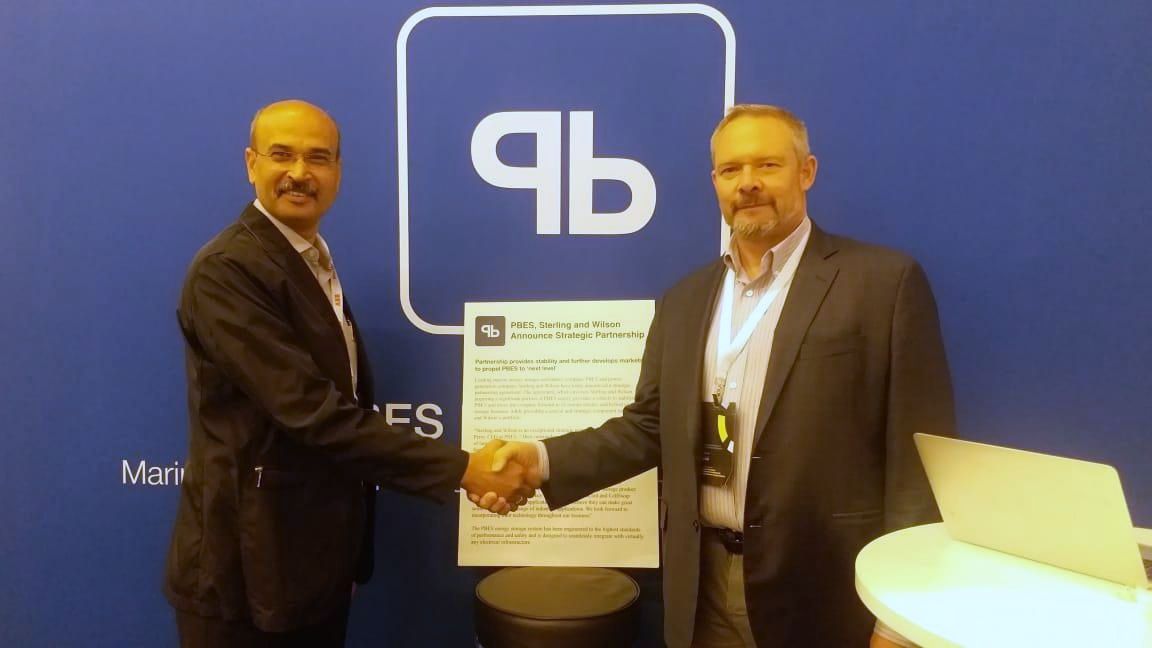
    Vancouver, Canada – June 5, 2019 – Leading marine energy storage and battery company PBES and power generation company Sterling and Wilson have today announced a strategic partnership agreement. The agreement, which involves Sterling and Wilson acquiring a significant portion of PBES equity, provides a vehicle to stabilize PBES and move the company forward in its marine electric and hybrid energy storage business, while providing a critical and strategic component in Sterling and Wilson’s portfolio.

    “Sterling and Wilson is an exceptional strategic partner for PBES,” said Brent Perry, CEO at PBES. “Their outstanding organization and understanding of large power systems make them an ideal partner strategically, as well as financially, in supporting us in taking PBES to the next level. We are delighted to announce this agreement and look forward to introducing their team and full range of products and services to our key customers and stakeholders in coming weeks, and long term success over the coming years”.

    Sanjay Jadhav, CEO at Sterling and Wilson Powergen added:, “PBES technology is undoubtedly the best quality and safest energy storage product in the industrial sector. Their key features such as CellCool and CellSwap were designed for marine applications, but we believe they can make great sense across a broad range of industrial applications. We look forward to incorporating their technology throughout our business”.

    The PBES energy storage system has been engineered to the highest standards of performance and safety and is designed to seamlessly integrate with virtually any electrical infrastructure.

    About PBES

    PBES is a leading designer and manufacturer of high power lithium-ion energy storage units and batteries. Comprised of the most experienced team in the sector, PBES is focused on providing value and safety for industrial, marine and grid energy storage applications. www.ssssspbes.com.

    About Sterling and Wilson

    Sterling and Wilson is an excellent example of how the Shapoorji Pallonji family has nurtured long term associations with its business partners. The Mistry and Daruvala families have been partners in Sterling and Wilson for 3 generations. This partnership will only grow stronger, as the 4th generations of both families have recently joined the business.

    Over the past 5 years, Sterling and Wilson has shown exceptional growth; with operations all over the globe, as well as an expansion in its range of services, the company’s turnover has shown an extremely positive growth. From a turnover of $254M USD (INR 1,760) crore in 2012, Sterling and Wilson group crossed a turnover of $866M USD (INR 6,000 crore) and is likely to exceed $1,443M USD (INR 10,000 crore) by 2020. From being a predominantly India focused company in 2010, Sterling and Wilson now operates across the Middle East, Africa, Australia and Europe. In the current year, the company is expanding to the USA and South America. From being a company that was mainly focused on doing MEP projects in India, Sterling and Wilson over the past 5 years has set up global operations in manufacture of DG sets, Gas based power plants, Waste to Energy, Turnkey data centres, Transmission and Distribution and Solar EPC. With its recent foray into energy storage, Sterling and Wilson is perfectly poised to play a pivotal role in the global trend of moving away from thermal plants to a future of renewable energy with storage.

    ###

    Media Contact PBES:
    Grant Brown
    Vice President Marketing
    PBES
    +1 604 328 2046
    gbrown@ssssspbes.com

    Media Contact Sterling & Wilson:
    Pradeep Singh
    Sr. Manager, Corporate Communication
    Sterling and Wilson Pvt. Ltd.
    +91 9930143519
    pradeepsingh@sterlingwilson.com

  • Practical Application of Energy Storage in Hybrid Commercial Vessels

    Practical Application of Energy Storage in Hybrid Commercial Vessels

    By Grant Brown, VP Marketing for PBES, Published in The Journal of Ocean Technology

    Marine engineers have long been aware of the potential efficiency increases from hybridizing their onboard energy systems; the ability to optimize the use of diesel generators by storing excess energy and using it to provide propulsion during low load times.

    However, only recently has the battery technology been improved to the point of allowing large-scale systems to survive in a commercial marine environment. Not only do these new energy storage systems survive, they are designed for and excel in commercial marine environments. Hybrid tugboats, offshore supply vessels (OSV), ferries and a variety of other purpose-built vessels all derive huge efficiencies from the use of onboard energy storage.

    These hybrids range from new builds to retrofits of existing vessels. Payback on investment is a critical component in the decision to convert or build a hybrid workboat. However, an often overlooked benefit is the redundancy and increased safety offered to the operator of a hybrid vessel. A vessel employing a large battery or energy storage system (ESS) not only operates more efficiently, it also has an ability to draw upon a reserve of energy instantly. This pool of energy may be used as spinning reserve to keep the vessel from harm’s way in the event of power loss, provide emergency navigation and hotel loads, auxiliary propulsion power, and even extra bollard pull to the main drives in the event of an emergency situation while towing. While these and other advantages, such as the environmental and cost savings benefits, are well-documented, real world lessons learned by an experienced integration and engineering team are exceptionally valuable. This experience helps vessel owners, operators and designers understand how to design and integrate a lithium energy storage system for safe, reliable use, now and for years to come.

    Simply put, batteries will reduce a vessel’s exposure to risk and make it fundamentally safer to operate, while providing economic gain for vessel owners.

    Read the full story here.  Read more stories from their August issue here.

  • Safety Concerns for Hybrid & Electric Ships

    Safety Concerns for Hybrid & Electric Ships

    Each year there are more and more hybrid or fully electric ships navigating waters worldwide. All modern commercial vessels may soon have some form of energy storage on board.

    These ships range in type from ferries transporting thousands of people daily to offshore supply vessels that maintain safety in critical oil rig operations. The ships increasingly rely on lithium-energy storage as their power source, with modern designs containing more than 1,000 individual modules (batteries). The technology has proven itself reliable and powerful, however, safety concerns linger and should be an utmost consideration for this new technology.

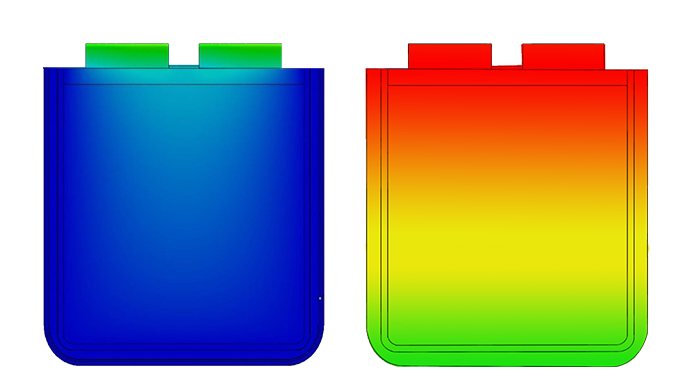
    The left – evenly cooled lithium cell using liquid cooling. The right – uneven heat distribution from air cooled cell.

    Not all battery systems are equipped with the same safety systems. Testing and certification for battery systems aboard ships has increased, but room remains to raise the bar higher.

    One of the biggest risks for batteries is thermal runaway. Thermal runaway occurs if the lithium-ion cells used in marine batteries are subjected to mechanical abuse, suffer from internal manufacturing defects, or operate over or under the correct voltage or temperature. Heat is generated within the lithium-ion cells and causes a reaction between the cathode material and electrolyte. This can result in the cells’ temperature increasing until they vent toxic and flammable gases. If ignition occurs, these gases can be a fire hazard.

    Currently, there are many battery solutions on the market that use an air-cooling system to try to maintain safe internal temperatures. The effective-ness is questionable, and the reliance on a thin-layer, fire-resistant separator between cells only reduces the fire risk from thermal runaway—it does not prevent it. It is far more sensible to take all reasonable precautions to eliminate thermal runaway from occurring in the first place.

    Liquid cooling is the only safety system currently tested and proven to pre-vent thermal runaway. Liquid cooling prevents batteries from entering thermal runaway by simply extracting more heat than the cells can produce. Similar to an engine block of an automobile, a low-pressure, high-volume closed loop of chilled water is circulated through the battery. Taken a step further, coolant can be circulated through the alloy core of the battery, around each individual cell, enabling removal of more thermal energy than the cells can produce when in an overcharge or damage scenario.

    In comparison, forced-air cooling only cools the external surfaces of the module and is ineffective at eliminating hot spots in the cells. An air-cooled battery requires around 3,500 times more air-flow volume than water-flow volume to achieve the same heat removal.

    Read the full article here.

  • Elektra named Ship of the Year in Amsterdam

    Elektra named Ship of the Year in Amsterdam

    Ship of the Year Elektra – Powered by 1040 kWh of PBES Battery Power

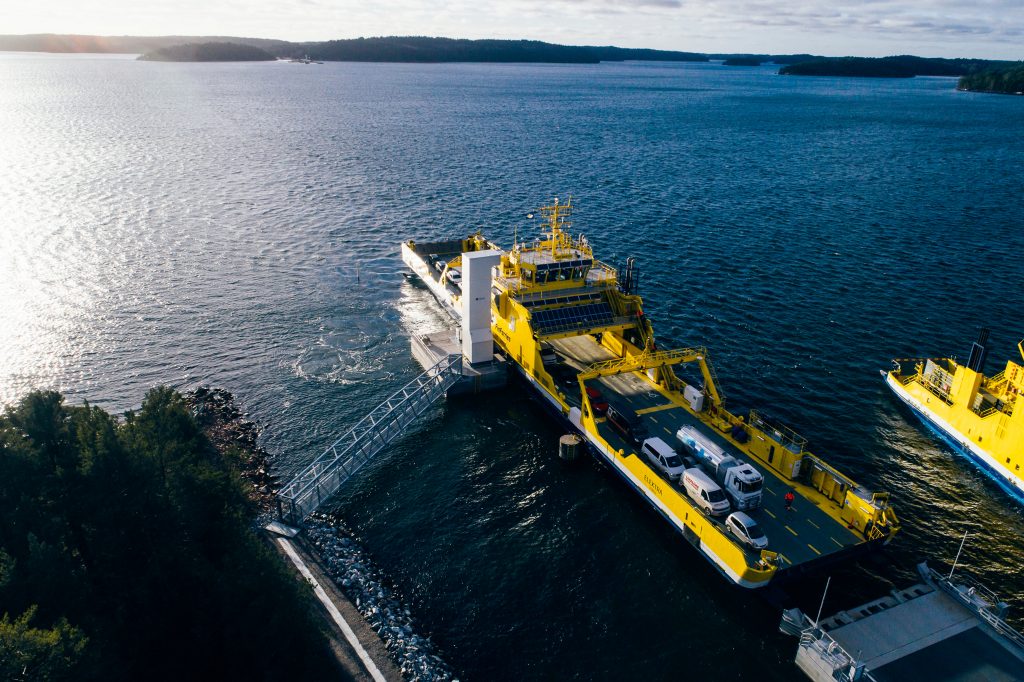
    The Finferries hybrid ferry Elektra won the international Ship of the Year Award at the marine industry’s Sulphur Cap 2020 Conference in Amsterdam. It is an esteemed, annually given accolade determined by a nomination from a judging panel of international experts and then open voting on the Sulphur Cap 2020 Conference website.

    There were three vessels nominated by the judging panel this year. They represented the best of the field in utilising eco-friendly technology in a newbuilding: Elektra, the electric ferry from Finferries, Cardissa from Shell that utilises LNG and Christophe de Margerie from Sovcomflot that also runs on LNG. The winner’s announcement was the finale that ended the night of the Sulphur Cap 2020 gala dinner on 17th of April 2018.

    “We were very proud that Elektra was even chosen as one of the three best. Just being nominated proved to us that our innovative and functioning eco-solutions have been widely acclaimed at the international level. It is a true honour for a shipping company the size of Finferries to be put into the same group with larger, multinational actors, and so winning was a wonderful surprise,” exclaimed Finferries CEO Mats Rosin, after the awards had been given out. The focus of Rosin’s thank you speech was on the importance of collaborative partners.

    “Elektra, however, is a result of fantastic collaboration. Many different actors have contributed to the work of building the most eco-friendly ferry in Finland. I would like to thank the behind-the-scenes team of this very special vessel: the Turku-based company Deltamarin Ltd came up with the concept and the Polish company StoGda did the design. The CRIST S.A. shipyard took care of building the vessel. Siemens in Trondheim developed the new technology and PBS manufactured the batteries. Cavotec delivered the charging system. I would also like to give a whole-hearted thank you to our commissioners: the Finnish Transport Agency and the Centre for Economic Development, Transport and the Environment of Southwest Finland. These two organisations believed in the vision of the possibilities of new technology. A special thank you goes out to the Finferries project manager and the entire supervisory team. They put a huge effort into the new vessel,” Rosin’s speech expressed.
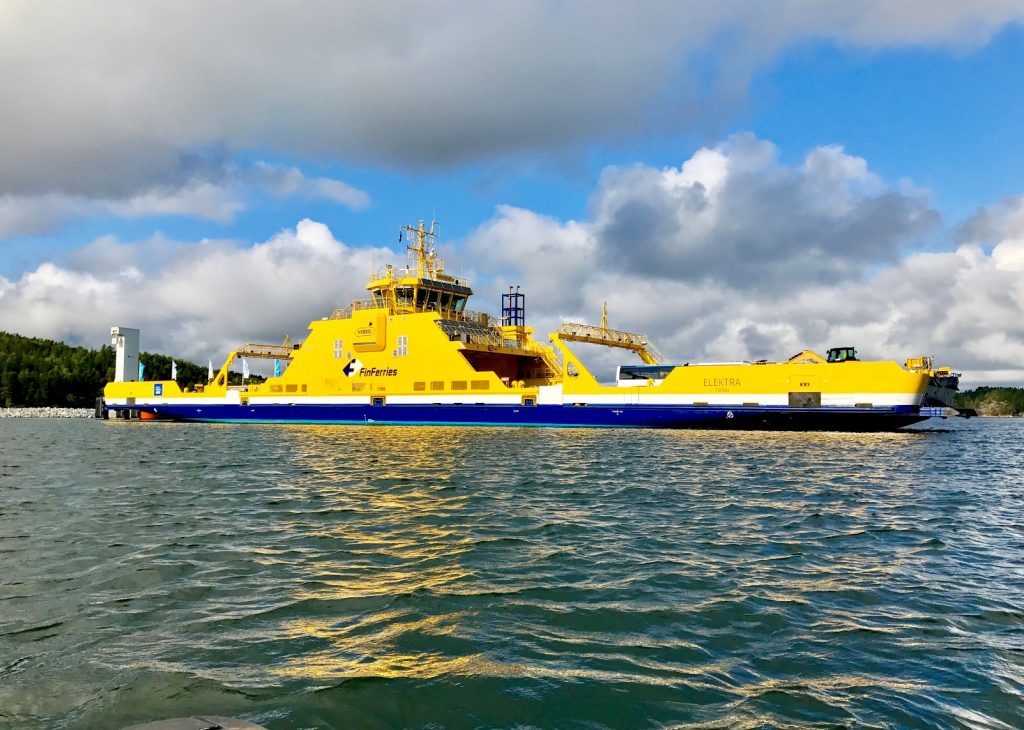
    Original press release can be found here.

  • PBES Batteries Power 2018 Electric and Hybrid Ship of The Year

    PBES Batteries Power 2018 Electric and Hybrid Ship of The Year

    Winner: Elektra diesel-electric roll-on roll-off passenger/car ferry by FinFerries

    PBES is proud to congratulate FinFerries on their win at Electric and Hybrid Marine World Expo for Propulsion System of the Year. Elektra, Finland’s first purpose built battery electric ferry, operates on a 1MWh battery system supplied by PBES. Launched in June of 2017, the vessel celebrates 1 year of service this month.

    “We feel very proud to have had a hand in Elektra’s win,” said Grant Brown, Vice President Marketing at PBES. “Many of the unique characteristics of her performance are directly a result of the PBES technology onboard. CellCoolTM technology allows the battery to be recharged in 5 minutes and at end of life it is easily refurbished and upgraded using the PBES CellSwapTM system.

    Elektra has an overall length of 98m, beam of 15m and draft of 3.55m, with five lanes to accommodate up to 90 cars. She travels her 1.6 km route across the Finnish Archipelago year round. Due to heavy ice conditions in the winter months, she carries auxiliary power generation equipment to augment the battery when needed.

    The PBES energy storage system has been engineered to the highest standards of performance and safety and is designed to seamlessly integrate with the electrical infrastructure on the vessel.


  • The world’s first 100 percent battery-electrically powered ferry connection

    The world’s first 100 percent battery-electrically powered ferry connection

    Excerpt translated from original Norwegian article, written by Tore Stenvold. Published in TU on June 4, 2018.  Link to original article here.

    Captain Kjetil Setter and Chief Commander Sindre Willumsen sits on the bridge on board in MF Eidsfjord. Sounds and vibrations you normally hear on a ferry are completely absent.

    Together with MF Gloppefjord, the ferry constitutes the world’s first 100 percent battery-electrically powered ferry connection. “These are fantastic functional ferries,” says Captain Sætre.

    Machine chief Ronny Kandal does not have much oil in either hair or hands. “There is actually more to do on board here than on a diesel ferry, but there are a few other tasks. And then it’s quieter and cleaner, “he said pleased. He does not long for noise and diesel, though diesel is also on Eidsfjord and Gloppefjord. Both have Scania engines that run on biodiesel as backup

    On the bridge to MF Gloppefjord, Captain Ole Kristian Hauge and Øystein Vereide, as usual captain, are also present, but today the deputy chieftain. They are delighted with the battery power. Fjord 1 was awarded the contract for operation of the two ferry connections from 1 January 2018.

    According to the contract with the Norwegian Public Roads Administration, Fjord 1 chose to build one electric and a low-emission ferry, but went in to build both ferries with high battery capacity for several hours of operation without charging.

    Bio-backup

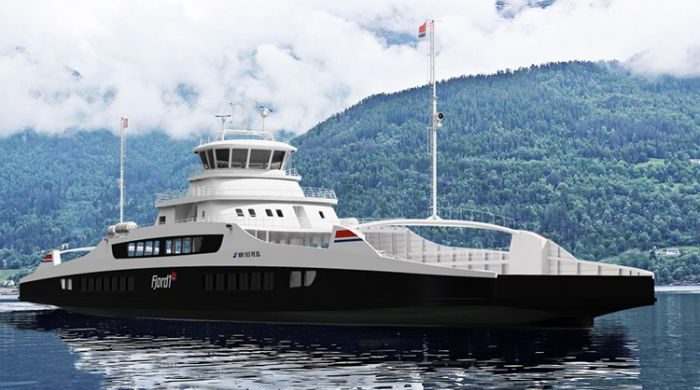
    Fjord 1 ordered two steel ferries from Tersan in Turkey in April 2016. They are designed by Multi Maritime and can accommodate 120 passenger cars, 12 lorries and 349 people.

    Each of them is equipped with two battery packs of 540 kWh from Canadian-Norwegian PBES. In addition, the ferges have backup generators from Nogva with Scania engines, built for biodiesel.

    Hard load

    6-7-minute charge with up to 1500 kW charge power on Anda. Transfers take 11 minutes.

    The charge power is switched off as battery capacity is reached. The Siemens power management system and PBES battery management ensure that batteries do not charge too fast and damage the batteries.


    MF Gloppefjord / MF Eidsfjord

    • Design: Multi Maritime MM102 FE EL
    • Shipyard: Tersan, Turkey
    • Surrender: December 2017.
    • In traffic on Anda-Lote: February / March 2018
    • Capacity: 120 passenger car equivalents (PBE) / 349 persons
    • Speed: 8 knots (max 15 knots) ‘
    • Transition time: 11 minutes
    • Length: 106, 04 meters
    • Width: 17.2 meters
    • Draft: 3.8 meters
    • Batteries: PBES 2 x 540 kWh
    • Generator set: Nogva 2 x Scania DI16 / Stamford 510 ekW 1500 RPM